Flat Pan vs Insulated Roof Panels: Which Is Best for Houston?
Get a Free Quote
Homeowners face a unique challenge when choosing a patio cover in Houston: our climate is hot, humid, and unpredictable. Between intense UV exposure, sudden downpours, and long stretches of 95°+ heat, the material you choose for your patio roof makes a huge difference in comfort and durability.
Two of the most popular aluminum roofing options are flat pan patio covers and insulated roof panels. Both are strong, long‑lasting, and HOA‑friendly — but they perform very differently in Houston’s climate.
Here’s a clear breakdown to help you choose the right option for your home.
1. What Are Flat Pan Patio Covers?
Flat pan patio covers use interlocking aluminum pans that create a clean, modern look. They’re lightweight, durable, and excellent for basic shade and rain protection.
Best Features
- Affordable
- Fast installation
- Clean, streamlined appearance
- Excellent rain protection
- Low maintenance
Learn more about aluminum patio covers here:
Where Flat Pan Works Best
- Shaded backyards
- North‑facing patios
- Budget‑friendly projects
- Rental properties
- Homes that don’t need heat reduction
Flat pan covers are a great entry‑level option for most Houston homeowners — but they don’t offer insulation, which matters in Houston.
2. What Are Insulated Roof Panels?
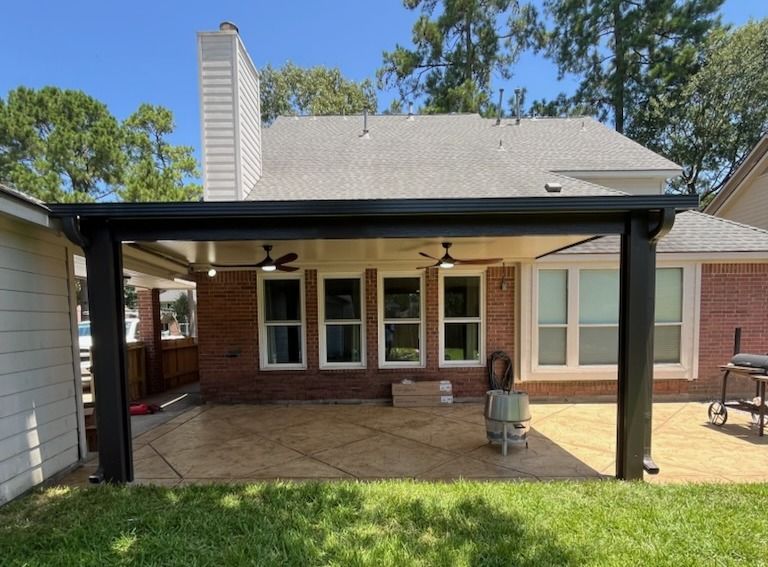
Insulated roof panels (also called foam‑core panels) combine two aluminum layers around a thick foam core. This creates a solid roof system that blocks heat, reduces noise, and supports electrical upgrades.
Best Features
- Dramatically cooler under the patio
- Reduces radiant heat
- Supports ceiling fans and lighting
- Quieter during heavy rain
- Stronger structural performance
- HOA‑friendly appearance
Where Insulated Panels Work Best
- South‑ or west‑facing patios
- Homes with intense afternoon sun
- Outdoor kitchens
- Large patio covers
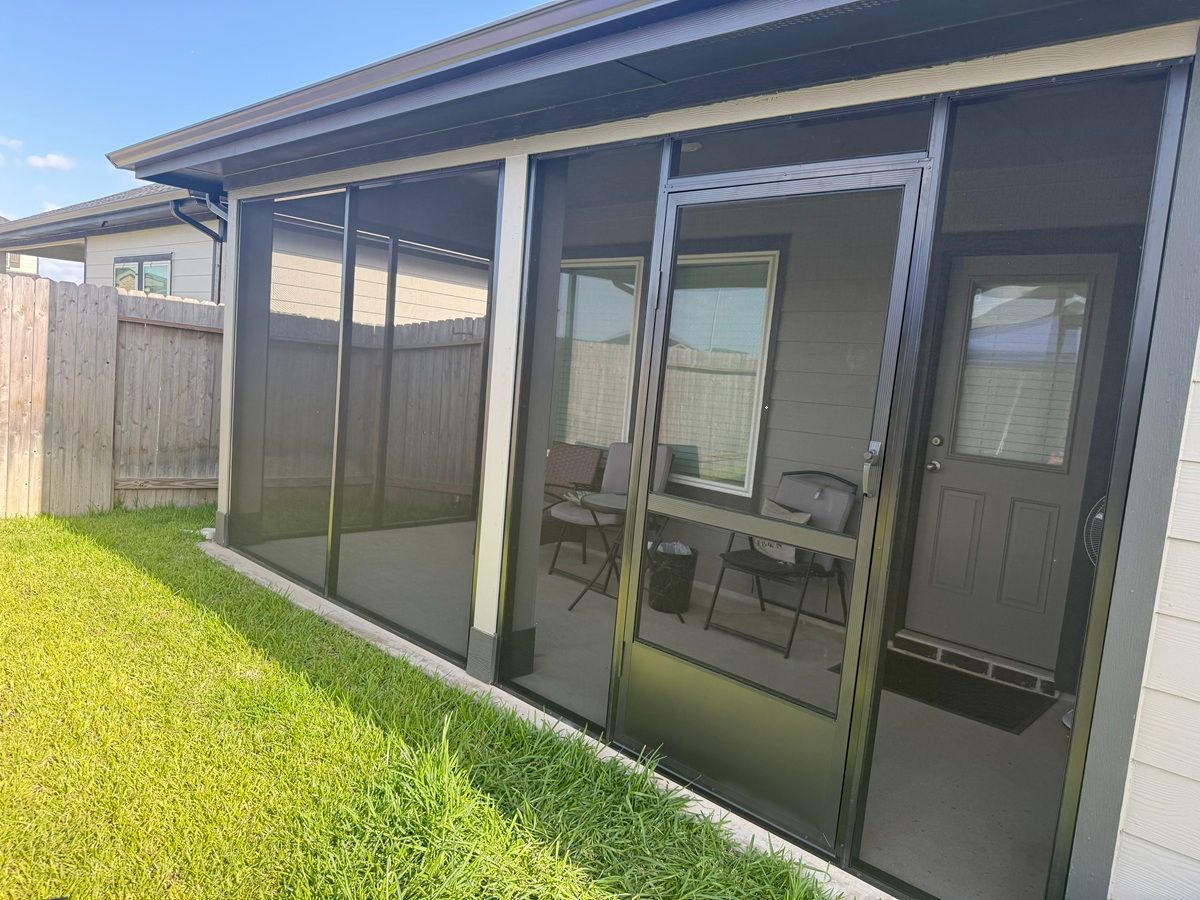
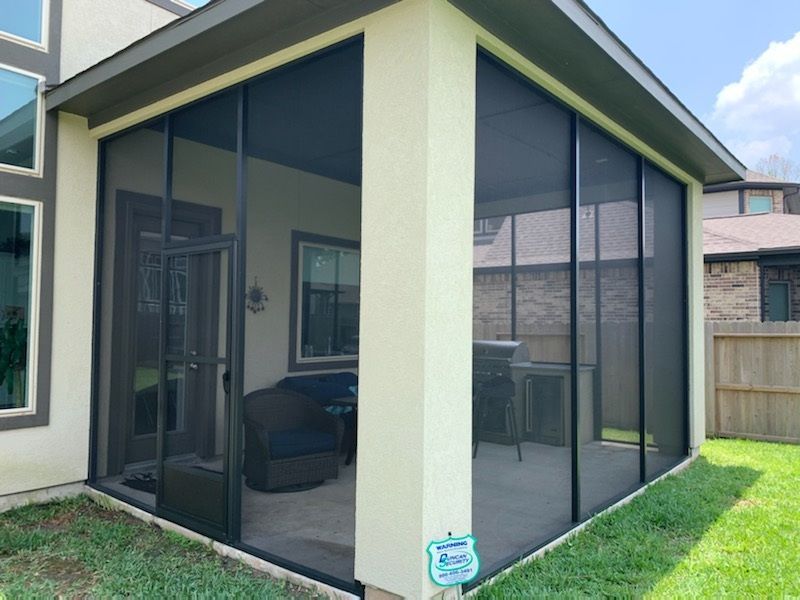
- Screen room conversions
- Premium backyard upgrades
If comfort is the priority, insulated panels are the clear winner. Learn how our custom patio cover extensions create energy-efficient outdoor living spaces.
3. Heat Performance: The #1 Factor in Houston
Houston’s heat is no joke — and this is where the difference between flat pan and insulated panels becomes obvious.
Flat Pan
- Blocks direct sun
- Does NOT block radiant heat
- Patio can still feel hot and humid
Insulated Panels
- Block sun and radiant heat
- Keep patios 15–20° cooler
- Reduce heat transfer into the home
- Make outdoor spaces usable year‑round
For Houston homeowners, this is often the deciding factor.
4. Noise Reduction: Insulated Panels Win Easily
Houston storms can be loud. Flat pan covers amplify rain noise, while insulated panels absorb it.
Flat Pan
- Loud during heavy rain
- Can echo under large spans
Insulated Panels
- Much quieter
- Better for outdoor TVs, conversations, and relaxing
If you want a peaceful outdoor space, insulated panels are the better choice.
5. Electrical Upgrades: Only Insulated Panels Support Them Properly
If you want:
- Ceiling fans
- Recessed lighting
- Pendant lights
- Outlets
- Outdoor heaters
…you need insulated roof panels.
Flat pan covers cannot safely support electrical wiring without exposed conduit.
6. Cost Comparison
Flat Pan (Lower Cost)
- Most affordable aluminum roof option
- Great for basic shade
- Minimal maintenance
Insulated Panels (Higher Cost)
- Higher upfront investment
- Lower long‑term energy and maintenance costs
- Adds more value to the home
7. HOA Approval in Houston
Most HOAs in the Houston area prefer insulated roof panels because they:
- Look more like a true home extension
- Match architectural styles
- Maintain a clean appearance
- Support integrated lighting and fans
Flat pan covers are still approved in many neighborhoods, but insulated panels are more universally accepted.
We also handle the Richmond, TX and Missouri City, TX HOA requirements as well, as these areas have notoriously strict guidelines.
8. Final Verdict: Which Is Best for Houston?
Here’s the simple breakdown:
Choose Flat Pan If You Want:
- A budget‑friendly shade solution
- A simple, clean look
- Basic rain protection
Choose Insulated Roof Panels If You Want:
- A cooler patio
- Quieter outdoor space
- Ceiling fans or lighting
- A premium, long‑lasting upgrade
- Better HOA approval
- A structure that feels like a true extension of your home
For most Houston homeowners, insulated roof panels are the best long‑term investment.
About the Author
Brian Sonnier
Brian is the founder of Lone Star Patio Builders, where he has spent years helping Houston homeowners transform their backyards into functional, beautiful outdoor living spaces. An expert in outdoor construction and local building trends, Brian specializes in designing custom patio covers, pergolas, and screen rooms built to withstand the unique Texas climate.
Ready to Build Your Dream Patio?
Call
(281) 773-1255 or request a free quote online. We’ll schedule a no-obligation consultation at your home and walk you through every step — from design to final inspection.
Contact Us
You might also like